A driving school in the Federation of Bosnia and Herzegovina runs on paperwork. Every candidate needs a place in the register, signed contracts, exam applications for the right canton, certificates, payment slips and an instructor’s diary, and all of it has to match. Most schools still keep it in binders and spreadsheets.
Driver puts that work into one web application, from the office to the instructor’s phone. It is the second product in the Driver family, next to the Driver Tests exam app used by more than 100,000 students. Driver is in final testing with demo schools before its first launch; this is how we built it.
- Steps from enrolment to licence, tracked per candidate
- 7
- Roles, from owner to instructor
- 7
- API endpoints behind the app
- 320+
- Automated test files
- 194
One record per candidate
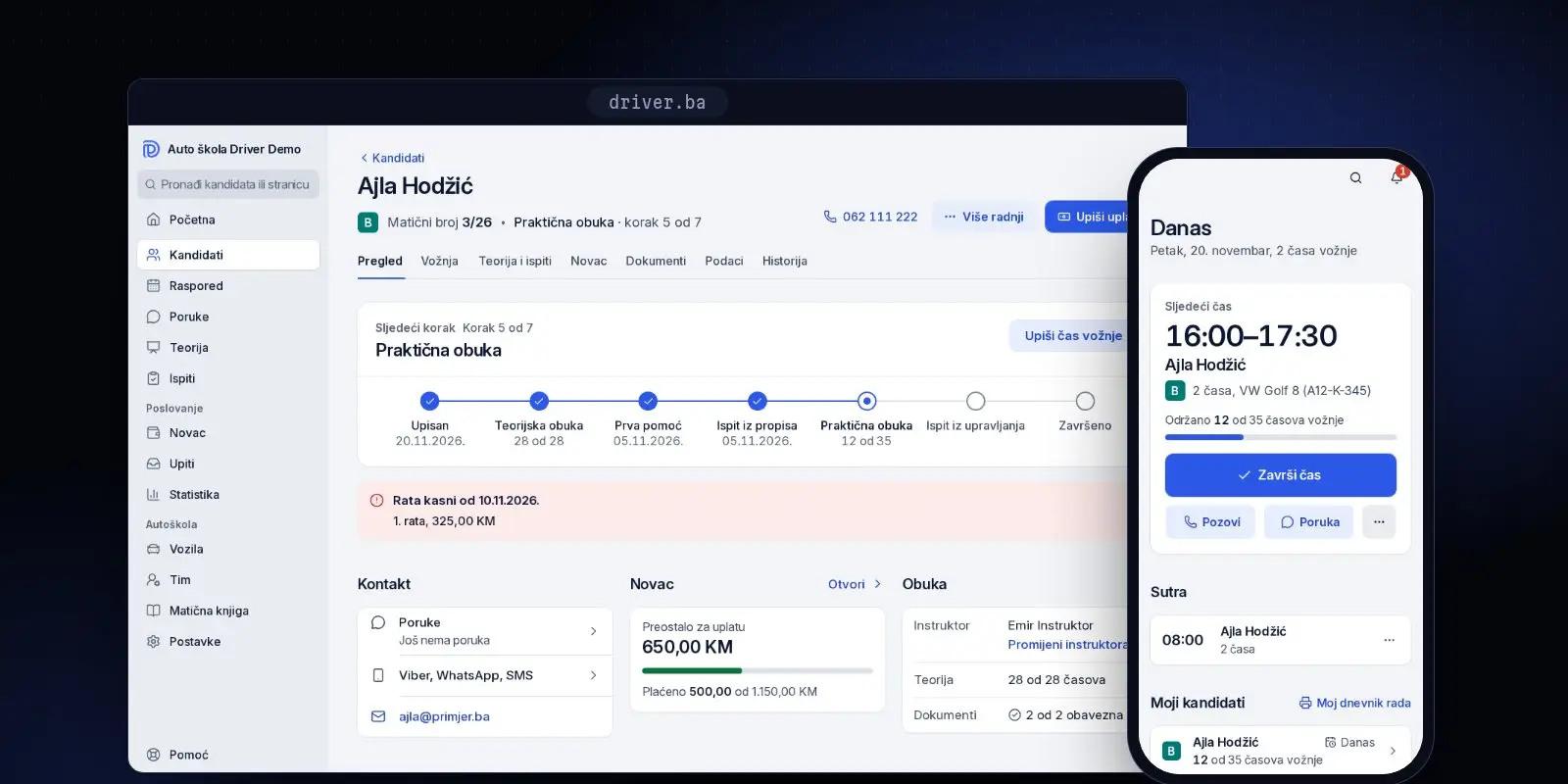
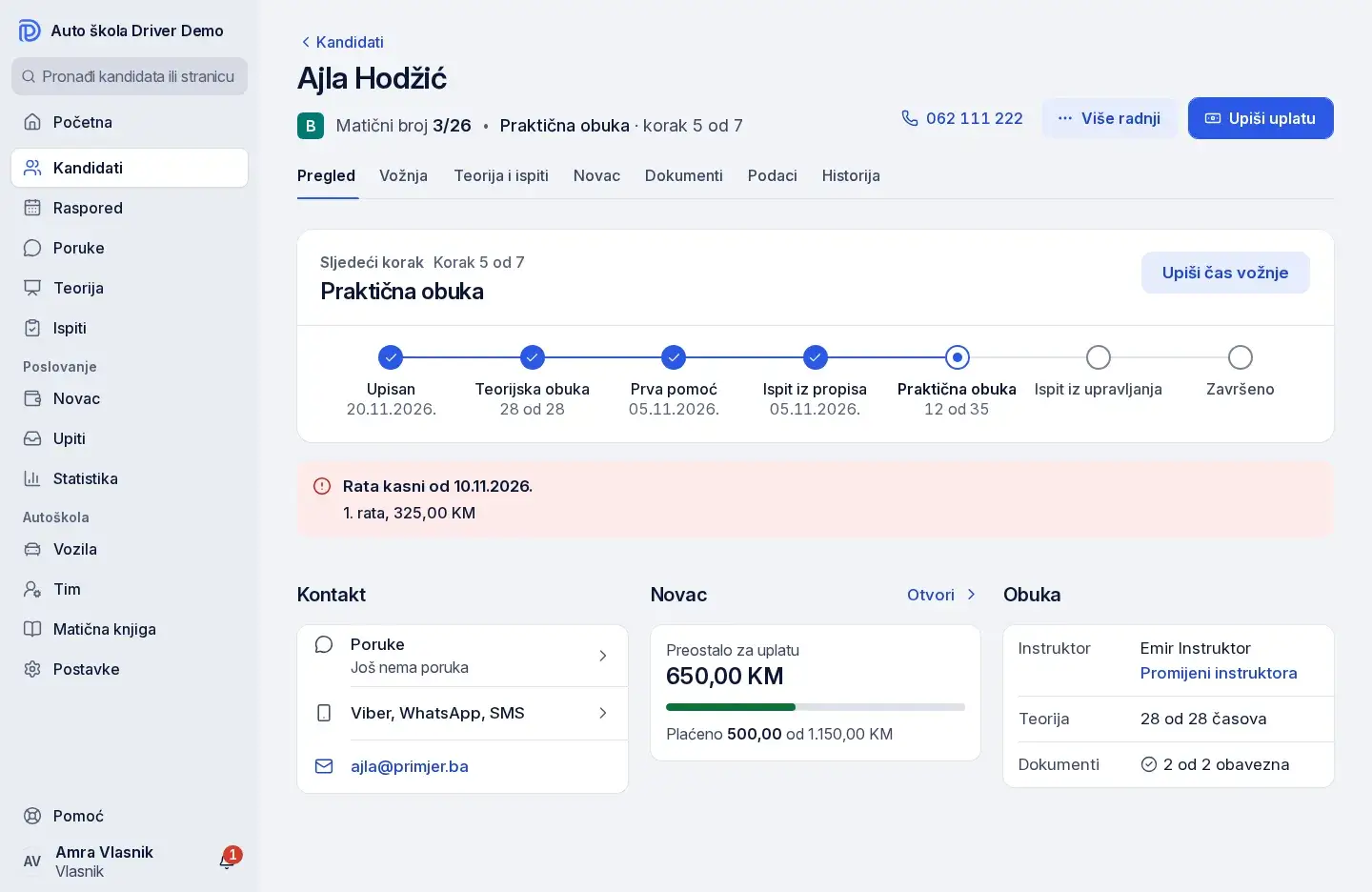
Everything starts with the candidate. Each one has a single record with a seven-step training path: enrolment, theory, first aid, the rules exam, practical training, the driving exam and completion. The record shows what is done, what is next and what is missing, from unpaid instalments to documents about to expire.
What Driver does
Official documents in one click
Exam applications, first-aid applications, certificates, training contracts and payment slips, filled in from the candidate’s record for the right canton. Every PDF is archived with a fingerprint of its contents.
A schedule without clashes
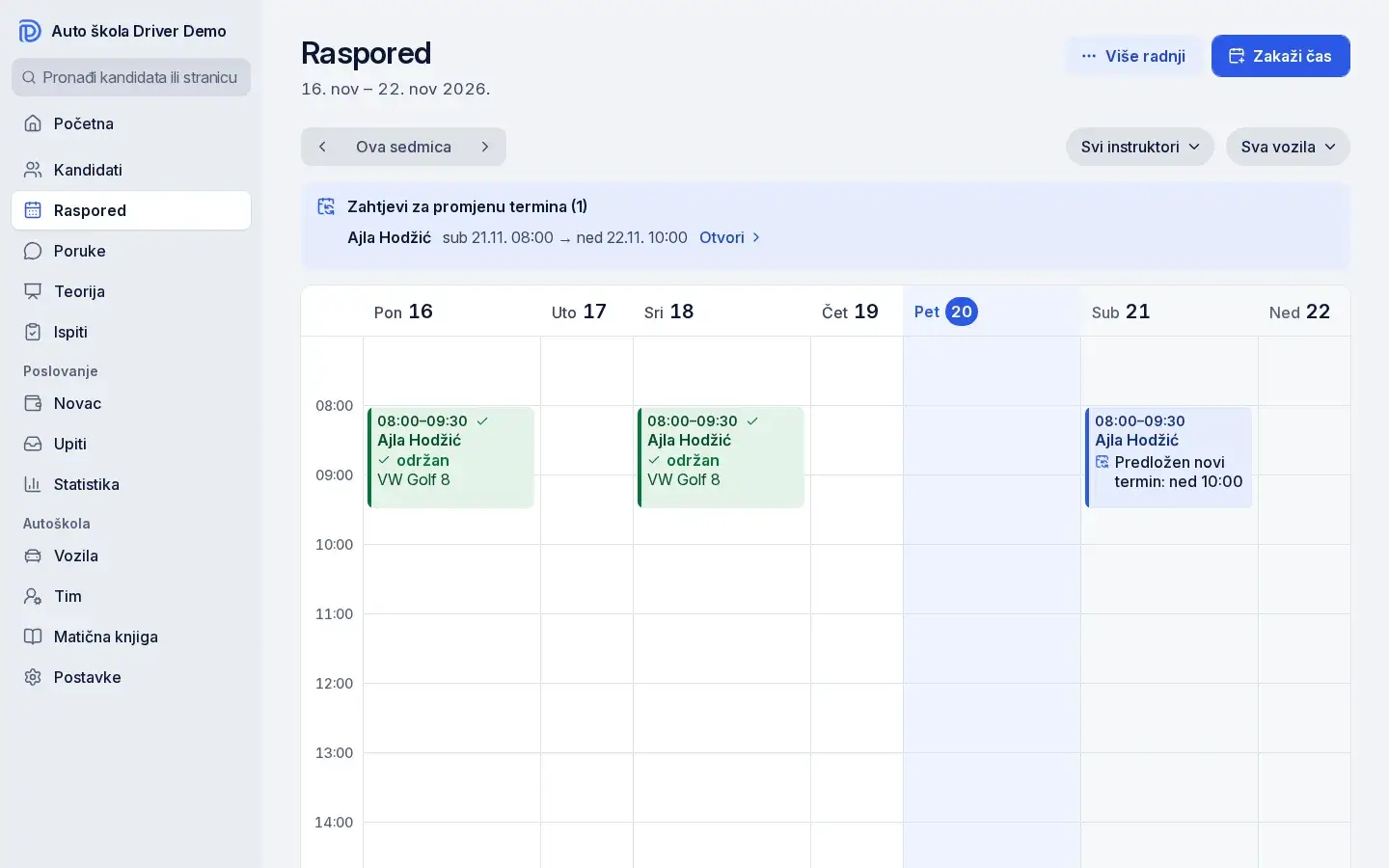
Theory groups with attendance and make-up lessons, and driving lessons checked against double bookings, the instructor’s licence and the vehicle’s papers before they are saved.
Money that adds up
A versioned price list, charges, instalments, debts, and invoices with VAT modes and credit notes, so the office always knows who owes what.
The instructor’s day on a phone
Instructors see today’s lessons, finish them and message candidates from their phone, and the app keeps working when the signal drops.
A portal for candidates
Candidates follow their own progress, read messages and ask to move a lesson; the school approves the change in its calendar.
The register, kept for you
The school’s register of candidates (matična knjiga) builds itself from the records and prints per year.
How it is built
The first version of Driver, from 2023, was a Vue and MongoDB app for a single school. For the new platform we rebuilt it from the ground up for many schools at once, on a relational database that fits the strict, connected data a school has to keep.
Stack
- Front end
- Next.js 16, React 19, Tailwind CSS
- Back end
- Node.js with Express 5
- Database
- PostgreSQL 18 with Drizzle ORM, 93 tables
- Documents
- HTML templates rendered to PDF with Puppeteer
- Phone app
- Progressive web app that works offline
- Monitoring
- Sentry
Security was designed in, not added later. Every record belongs to one school, and tests check that one school can never read another’s data. Seven roles, from owner and office staff to instructors, accountants and a read-only auditor, each see only what their job needs, and every change lands in an audit log.
The forms follow the rules of each canton: the place data covers all 10 cantons and 79 municipalities of the Federation, with templates for Sarajevo Canton and the rest of FBiH. An optional assistant can read a photo of an ID card or licence and fill in the candidate’s details, and it stays off until a school turns it on.
Where Driver is now
Driver is complete and runs end to end with demo schools. We test every flow with Playwright, from enrolling a candidate to printing the register, and we are preparing the first schools for launch.